Friday, 28 June 2013

Corfu to Sarande, Albania


Sailing from Le Castella, you might remember that we were still deciding on our destination. With very variable winds throughout the night, which meant that we were always putting up or taking down sails, motoring then back to sailing, we didn’t have the stamina for the full distance to Sarande in Albania. And some lovely Greek islands were right there in the way, so why pass them by? Our first night in Greece was spent anchored in a pretty bay at Erikoussa, just north of Corfu, where we learned that no island in Greece is so small that it doesn’t have a taverna.
 

Next day we followed Guy and Seed in Skaf over to the small harbour of Kassiopi in Corfu. The best known island in the Ionian, Corfu is a beautiful island of forests and green hills, along with the blue water beaches we had been expecting. At this time of the year, the whole island seems to be covered in flowers and ripening fruit on the trees – it really is gorgeous and you can see why the rich and famous have long been purchasing villas here. Some of the locals are understandably resentful, however, and you can see why as soon as you try to walk anywhere. Private villas mean that access to the best places is impossible, and many (most?) of the beaches are not available to the public. We anchored in a lovely bay around from the harbour and used the dinghy to get into town – beach access is obviously not a problem if you can swim off the back of your boat – but I am glad we’ve managed to keep our beaches public in Australia. I would hate to have to watch through the fence as rich foreigners played on my local beach.
 

We were due to leave with Skaf for Sarande after two days in Corfu, but sadly Seed’s father passed away and they had to return to France. So we journeyed on alone, making the crossing of just six nautical miles between Greece and Albania at this point, and docking comfortably alongside the Catamaran Ooro, out of Fremantle in Western Australia. Unbelievably, another Freo boat, Saving Grace, came in the same day, making three of the four yachts in Sarande Harbour all registered in Fremantle! We were welcomed in by Agim and Leela, who helped us dock and then processed all our paperwork. They have been endlessly helpful, and if there is ever any sort of problem on the dock, one of them will magically appear to sort things out. When the crew of Ooroo had some difficulties with an official in a neighbouring bay – he threatened them and made them leave without even letting them retrieve their line – the line appeared on the dock next to their boat the following morning, and Agim informed them that the fellow had been dealt with, that unfortunately there are still some people who are living in the past.
Three Fremantle yachts in Sarande harbour

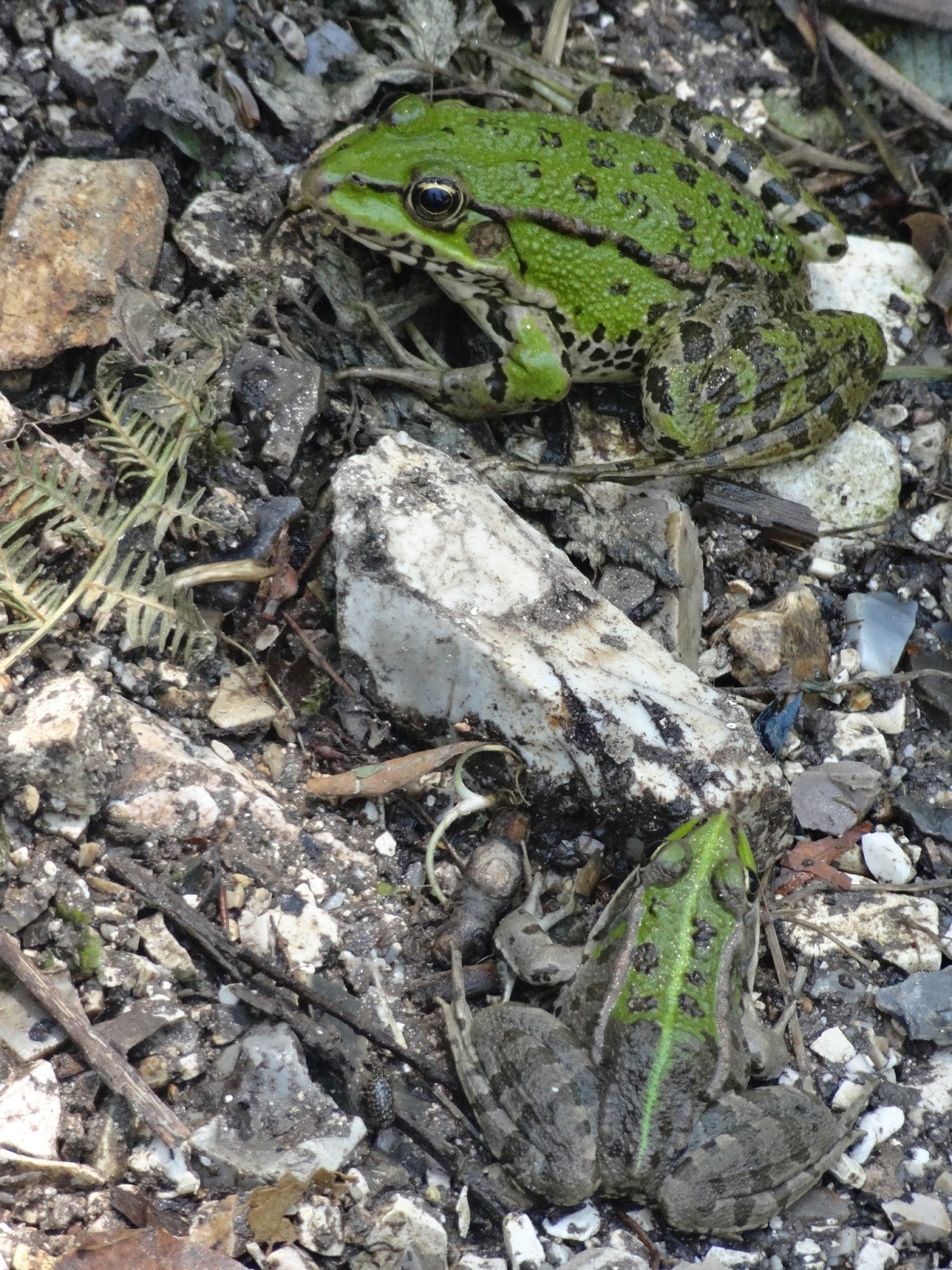
Ray and Annette, from Saving Grace, have just wound up a chartering business they’ve been running in the Ionian for the last seven years and they are now doing some cruising for their own pleasure. We went with them on a day trip to one of Sarande’s famous attractions, the Blue Eye Spring, where clear fresh water of just 10 degrees C gushes from the earth creating a powerful stream of the most refreshing water you can imagine. The place is in deep woods, where apparently lynx and bears still abound. There are certainly plenty of butterflies, electric blue and gold dragonflies and bright green frogs. Kind of like fairyland, really. It has a couple of simple restaurants and a few basic cabins, and the absence of tourist “attractions” is part of its appeal.


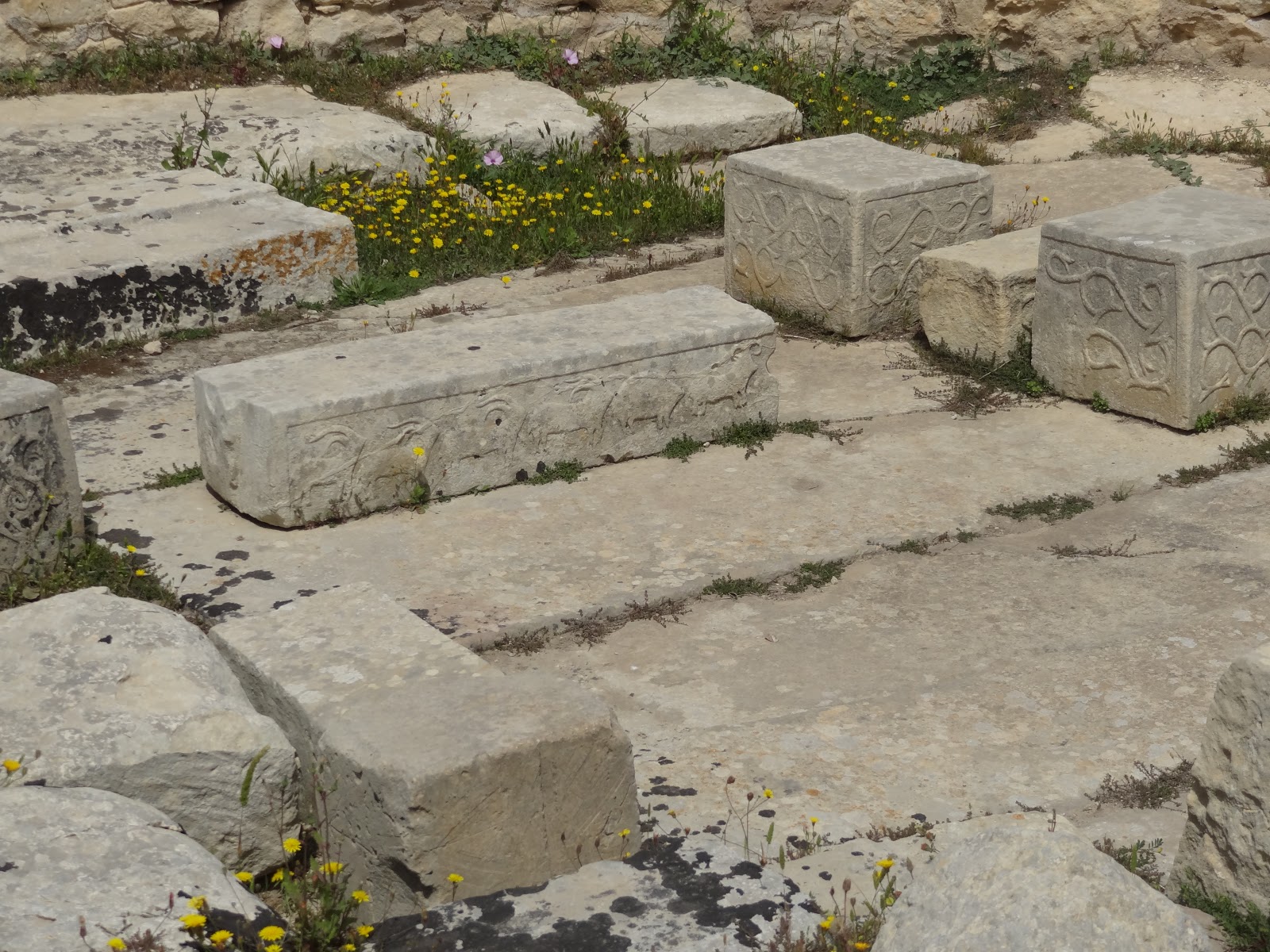
The other must-see near Sarande is the archaeological park at Butrint, a forested peninsula that has been described as a “microcosm of Mediterranean history”. One of its earliest incarnations was Greek, where there was a sanctuary of healing dedicated to the god Asclepius. A substantial Roman settlement succeeded that, and there are fascinating remains of the theatre, villas, temples, baths, fountains and the aqueduct. In the Christian era Butrint was the bishop’s seat and there are extraordinary remains of a 5th Century basilica and a baptistery with a lovely mosaic floor, still largely intact. Then there is the Norman castle and the fortifications of the Venetian period. Finally, Ali Pasha built a castle in the late 18th Century, where he entertained celebrity guests such as Lord Byron. Interestingly, the excavation of Butrint was undertaken by an Italian team beginning in 1928, part of Mussolini’s drive to recreate the glories of the Roman Empire.  You experience Butrint as a walk through the woods, suddenly happening upon an ancient well, or a section of a massive wall, a villa with fine brickwork in stone and terracotta or the remains of a temple overlooking the shimmering estuary. Once again, there is just enough infrastructure to make it enjoyable – explanatory plaques, drink vendors, a small local handcrafts stall, maps, toilets – but no touts or hawkers, and you can actually get in close to look at things. The only restricted areas are the actual digs where work is in progress. It is quite wonderful.


Food, both the fresh produce in the market and meals in restaurants, is excellent and very cheap. I’m told that all the fruit and vegetables are organic as the farmers cannot afford chemical fertilizers or pest control. They are certainly delicious – and it’s cherry season! Our favourite restaurant was Fredi’s Taverna, just a street back from the harbour on an upstairs veranda. We tended to eat a range of small dishes, like Greek meze or Spanish tapas, where you can taste a variety of the local specialties: meatballs, crunchy rice croquettes, stuffed peppers, squid, fried zucchini etc. This, plus bread, beer and fruit, typically set us back about three euros per person.

Perhaps Albania’s long stretch under the dark cloud of the dictator Hoxha has had this one silver lining: that it has not (yet?) suffered the overdevelopment that blights the Mediterranean coasts of Spain, Portugal, Morocco, Tunisia and probably other places we haven’t yet seen. The hotels and apartments being built here seem to be on a human scale, and the waterfront is lively and attractive. We’ve found the people friendly and welcoming without any pressure to buy stuff. The young people often speak excellent English and are keen to try out their skills. You can see evidence of the privations of the past in the remnants of brutal Stalinist architecture and in the small stature of the older people. Often the older folk seem stony-faced and suspicious, which is hardly surprising given what most of them have lived through, but a smile and a greeting typically transform the encounter; they beam in return and assure you that you are very welcome in Albania.   

 
Many thanks to Linda and Hugh Moore of Wild Goose, on whose recommendation we came here; we’ve thoroughly enjoyed our stay and we would definitely pass on the recommendation to other cruisers.

Friday, 21 June 2013

Calabria


Calabria, the province on the sole of Italy’s boot, is the original home of many of Western Australia’s Italian families. They emigrated during the 1950s via assisted passages, leaving one of Italy’s poorest regions which had been further devastated by an earthquake in 1953. Mostly young men, the pioneering migrants seized the opportunity to work hard, then started vineyards, market gardens and small businesses of their own. Once established, they sent home for the rest of the family, and for brides. In some cases, entire Calabrian villages were transplanted to WA.

 
We hired a car for a few days to explore the Calabrian countryside while Common Sense was moored in the nice little town of Le Castella. It was fascinating to see the small towns and villages nestled in the valleys, or perched atop the steep hills. Some of them look as though they haven’t changed since the 1950s – except for the satellite dishes beaming in endless soccer matches and melodramatic soapies.

Driving was fun, if your idea of fun includes hairpin bends on mountainsides, potholes the size of bathtubs, driving along ridges with a sheer 500 metre drop on both sides and numerous Italians overtaking you on blind corners at high speed. A bit of a buttock-clencher for me, but Terry embraced his inner Andretti and was driving like a native after day 1 (apart from the blind corners, of course).

 
The scenery was really spectacular in the mountains north-west of Crotone, views of deep green woods, fertile farmlands and olive groves laid out in patterns and the hazy blue Med lapping it all in the distance. We found a beautiful lake in the mountains at Palumboso, eerily deserted despite the glorious weather and the spring flowers in bloom. It is a popular resort in the summer, and also for skiing in winter, but Italians, like Americans, seem to be on a strict holiday schedule – you go to certain places at certain times. The only place we could find open was a restaurant with an ice-rink inside! It wasn’t operating, but in the season it must be amusing to eat your pasta while watching a hockey game or some figure-skating. And the pasta al funghi was great, by the way, even though we were the only patrons.

 
Other excursions - to Crotone to see the Greek ruins and the archaeological digs and to Isola di Rizzuto – and we also grabbed the opportunity to fill our fuel cans (25 gallons = $A279) and do some heavy shopping (ie mostly beer). After a week we had become very fond of Le Castella, especially the ritual passeggiata up the main street each evening to the Camel Bar, where we could sit and enjoy a quiet drink and watch the passing parade.
Remaining column from the Temple of Hera at Crotone

A few days of good weather lay ahead, so it was time to set forth across the instep of Italy. Would we head for Santa Maria de Leuca on the heel of Italy (80 nautical miles*), the Greek islands north of Corfu (128 nm) or all the way to Albania (150nm)? It would all depend on the wind, the seas and our stamina.
Mystery destination...

* We travel at an average of 5 knots, which is 5 nm per hour

Sunday, 9 June 2013

Goodbye Sicilia - We'll be Back!


It wasn’t difficult to spend a few more days in beautiful Syracuse. We checked out the Archimedes museum – definitely one for the maths nerds, though they’ve put in an effort to make it interactive. Amongst his many contributions to physics and mathematics, Archimedes was Syracusa’s most potent weapon against the invading Roman fleet during a siege. Once the fleet was trapped in the harbour, the Syracusans used Archimedes-designed giant catapults to hurl rocks and other debris with great force against the ships. He also designed an array of large mirrors, which were assembled in a curve to focus the sun’s rays onto the sails, igniting them. The Romans were under strict instructions to capture the genius alive, but Archimedes was killed in his house, somewhat ironically, by a soldier with a sword.

A little out of town there is an archaeological park, home to an ancient Greek theatre which is still in use (Oedipus Rex, Antigone and The Parliament of Women were playing while we were there), a Roman theatre and an excellent museum. The wealth of artefacts was organised in a sort of spiral through the ages, from Neolithic to Roman, so you could really see the evolution of pottery, metalwork and other artefacts, as well as the influence of trade and conquest.

After five days at anchor, using the dinghy to get around, we decided to moor at the town dock for a while to make it easier to take on water and food, and to enjoy a few nights out at the city’s great restaurants. The town dock is free for five days, and you are right there on the beautiful boardwalk, in prime position to watch the locals make their passeggiata in style each evening. The only downside is that you have to shift position every now and then as superyachts or small cruise liners come in. Unfortunately at this time Terry broke his toe accidentally kicking something in the cockpit, so our excursions were curtailed somewhat. We did manage a walk around the tip of the old city of Ortigia, which was beautiful, and of course eat a couple of excellent meals (Don Carmelo’s is highly recommended). Good water was free from a public tap near the dock, and we made many trips with jerry cans to fill the tanks. Remember, nothing on a boat is easy! While loaded up with water cans (and several good meals) Terry broke our passerelle (gangplank for getting on the boat) and we had to make an emergency one from an aluminium ladder purchased at the local hardware store. Actually, with a bit of modification this turned out to be ideal - plus we also found a neat little fold-up cart for toting water cans! So after one final visit to the wonderful market for fresh swordfish, tomatoes, cherries, oranges, baked ricotta it was nearly time to move...

Common Sense (right) on the public dock in Syracuse
 
Another superyacht was heading in, so rather than moor again, we decided to go out on the anchor again for our last night. We farewelled Yorge and Karina, a delightful Greek couple who gave us some excellent tips for our upcoming cruise with Kathy, Leonie and Steve (can’t wait to see you guys!) and then headed out into the bay. We really recommend Syracuse as a destination – there is a lot to see and do, and it’s a genuinely warm and welcoming place.

A pleasant day of mostly sailing plus a bit of motor when the wind changed, and we reached Acci Trezza, our planned overnight stay. Well that was the only part that went to plan. It was marked as an anchorage but there was clearly no place to anchor in the tiny fishing harbour, so we tried for a mooring between a fishing boat and a French yacht. Aarrgh! We had been lulled into false confidence by the easy Med mooring on the dock in Syracuse where we could drop the anchor at the bow and back in with plenty of space and good holding on the bottom. This was a different matter – the wind blew us sideways, the bow-thruster only worked intermittently and the anchor didn’t dig in! We turned and tried again, with the French guys trying to assist, but we managed to get stuck on the anchor chain of a large fishing boat, with the wind blowing us hard onto it. The French blokes tried to float a long line out to us to pull the boat off, but it would only float so far so I had to jump in and swim out to get it. It was still too hard to pull us off in the strong wind, so we launched the dinghy in record time and Terry tootled around to attach a line. And what happened then? The wind changed and we floated gently off the chain. Marcel and Olivier, our new best friends, pulled us in sideways to the dock behind the fishing boat and everyone was able to breathe again. A few of the local fisherman had looked on with amusement during the whole process and advised with the usual Italian + English+ mime and gesture that they would be going out at midnight and that we should stay right there!

The Cyclops' Islands
 
Whew! Time to relax and share a beer with Marcel and Olivier, a jovial and generous father-son team of cruisers. Olivier sounds like a similar thrill seeker to our Paddy – kite-surfing, snow-boarding and snow-kiting, which I had never heard of before but involves ski-ing up the slopes as well as down them. I hope some kind boater is there to help them when they need it; cruising karma seems to work this way.

We recovered enough from our ordeal to go for a stroll around this lively little town. Apparently it’s an Italian tourist destination rather than an international one, so there were plenty of people out eating and drinking and making their passeggiata around the town and the waterfront. Acci Trezza is famous as the home of the Cyclopi in Homer’s Odyssey, and an array of strange pointed rocks at the harbour entrance are supposed to be the very rocks hurled by the enraged and blinded Polyphemus as Ulysses and his remaining (uneaten)sailors made their escape.

The next morning saw us underway early, escaping before the return of the fishing boat made exiting any more difficult. We were heading for Taormina, a comfortable three hour sail up the beautiful east coast of Sicily, which is dominated by the brooding presence of Mt Etna, towering over all. The land around the volcano is incredibly green and fertile from the mineral enriched soil and the abundant water from melting snow – clearly the reason people continue to live in its shadow despite the ever-present threat. Etna creates her own weather, with clouds of vapour issuing from the crater. Her last major eruption was in 2001, but there are frequent hiccups and lava flows which are said to be spectacular.

Etna beginning to smoke...
 
It wasn’t really a pleasant sail, with quite a significant swell making for a rocky journey. And unfortunately, the swell was coming right into Taormina Bay. We had a look at the anchorage, where three other yachts were moored or anchored, and decided that it was just too rough and dangerous: even the catamarans were bouncing around like corks. So, sadly, we had to give Taormina a miss this time around, which is a shame as it looks like such a beautiful town; perched high on the hills with a fabulous view of Etna and the coast. A funicular railway takes you up the slope from the water to the town. Ah well, we’ll definitely return to Sicily and will save it for next time.
Taormina - the sea looks much calmer than it really was!

So now we had only one choice – head for the mainland – but the nearest useable harbour is a long way away and the south coast of the ‘sole’ of the Italian boot is generally fairly hostile from an anchoring point of view. Le Castella seemed like the best place to head for, and that meant an overnight trip and arrival at about 10am the next morning. So we changed course and hoped for more wind, which did eventually arrive as we crossed the Straits of Messina. The narrow point of the Straits is where Ulysses encountered Scylla and Charybdis, respectively a many-headed sea monster and a giant whirlpool, one on each side. Apparently these were based on fact – there was a maelstrom here, until an earthquake changed the topography, and it was also a common place to encounter waterspouts – like snake headed monsters and just as dangerous. We only had a bit of strong wind to contend with, which was a relief. During the night we had good winds and were able to sail at 6 knots for a good clip before the motor had to go on again. One thing we are learning is that Mediterranean weather is very localised and rapidly variable. No wonder it took Ulysses ten years to get home – those winds that got loose from the bag are still out there!

And finally we made it into Le Castella, a lovely small marina with a huge old Spanish castle built on the point, over the ruins of a Greek temple. We backed in with no trouble at all and the staff have been friendly and helpful, the rates very reasonable. The Ionian Sea is calm and blue, the beer is cold and we’re very happy to be here in beautiful Italy.

Wednesday, 29 May 2013

Syracusa (Terry)


We sailed from Porto Palo after a slightly disturbed night (wind across swell) and made good time to start with – wind was off our beam at about 20 and we made 5s to 7s for quite a while before it quit on us.  On with the noisemaker before the wind returned.  Unfortunately it was a Noserly so it just made the motoring uncomfortable as we had to head out directly in to it to avoid a no-go nature reserve that two other yachts didn’t seem to give a stuff about.  When we turned after clearing the corner of the reserve we had 20 knots on the forward side and turned off the engine to sail into the Grand Harbour of Syracusa.  Sailors have been coming into this harbour for thousands of years so we were probably boat number 1 squillion and twenty.

 
Entering Syracuse harbour
 

It is magnificent and when we arrived I saw a yellow boat in the distance.  It was Benoit, our friend from Monastir with his family and Guy and his family in front of them!  Off to the port was Eric, the solo French sailor we spent time with in Monastir, Lampedusa and in Malta.

 
Benoit, Flo and family aboard Baba
 

Wonderful.  Off we went to the market this morning – one of Europe’s best.  Got two large Sole for dinner – cleaned and skinned in front of us, €7.  Fresh baked ricotta, €4.  Stuff, stuff, stuff.


Then we walked all over town trying to find the Immigrazione (about time we behaved ourselves).  I think we are rare and nobody bothers because we got sent all over the place from Guardia Costiera to Immigrazione and finally to the Polizia Frontiere.  They were excited that we were there and about 5 of them came out to see us.  The man we were dealing with took our passports to stamp and came back and told us “Special stamp, Syracuse” and indeed it was, a Syracuse stamp in the passports.  Shook hands all round with him and his boss and off we went.  Legal!

We dinghied back later in the evening and went for a wander on the promenade.  We wound our way up the stairs to the Cathedral but couldn’t go in for a stickybeak because there was a wedding under way.  We went across the piazza a few metres for a drink and sat outside with children kicking soccer balls, kids riding bikes with dogs chasing them and a very accomplished accordion player entertaining us all.

The bride came out of the church to an honour guard and the whole square erupted in applause.  She was impossibly beautiful, and his nibs was just the picture of elegance and charm (possibly a little pride in there also?)  Off they went for a promenade to the north for a while, then they sauntered back for a promenade to the south and departed.  All the stuff of romance novels and movies.
 

Everyone in the bar switched from beer and wine to Aperol Spritz.  Although I have resisted being a trendy in the past, this seemed like a good trend to follow and a pleasant glass it was too.


Across the way, a couple of old-ish nuns came out of the Cathedral admin doors.  All at once, the group of children kicking the ball around ran over to the older of the two for a hug and a kiss.  They genuinely fussed over her and she hugged and kissed them all.  They went back to their game and the two nuns wandered off across the front of the Cathedral and another group of kids spotted them.  Same deal, they all ran over to the older one of the two for hugs and cuddles and kisses.  She must be somebody special because they all ran to her, boys and girls alike.

We wandered through the old streets for a while and then returned to our dinghy to get back to the boat.


What a wonderful city this is.

Next day was not so pleasant with some savage southerlies so we all kept our heads down.  We went into town for a visit to the Archimedes Museum (he lived in Syracusa) and a visit to the Fonte Aretusa for a Geocache (through a small aquarium which was nice).  We found a small deli for lunch and had afor €1.70 each.  They were the best arancini we have ever had anywhere. (they were a Sicilian invention)  I also discovered a beer made in Sicily called Ceria, which was twice the price of the arancini!  But it wasn’t bad at that.

One of my favourite TV characters, Inspector Montalbano, is a well known arancini lover and has contributed to the popularity of the dish.  I was very excited to see a TV Weekly type magazine in Malta that announced yet another season of Montalbano with almost all the original characters.  He is placed in the Ragusa area, where we are likely to spend next winter so I can see all the Montalbano places – there was a book in the bookshop we went into yesterday all about the series, with all the common scenes from the TV show.

Enough fantasy stuff.  Today we went to town to get some wine.  We were told by our friend Rene that there was a wine retailer over the bridge near a florist by the church with the round front (but not the ugly new monster church in Syracusa).  Off we went to find this purveyor of fine wines.

He is located in a small shop near two mechanical repair shops with a handpainted sign advertising different wines.  Inside are about 10 massive hogsheads with labels on them advertising the wines within.  The old man’s name is Sebastiano Russo.  We tasted a couple and bought 2 litres of a red for €3.20 and two litres of a white for the same.  He fills up used 2 litre water bottles for you to take.  4 litres for €6.40?  Of a three year old red and an aged white.  He also gave us a sample of a dessert wine that we will go back for – that was upmarket stuff at €3.20 a litre.

Then we wandered back over the bridge to the old city, picked up our laundry (€10 for 8+kg) and sat on the quay to have a couple of beers before dinghying back to Common Sense.

This is a nice place to be, for sure and certain.


Thursday, 23 May 2013

Gozo Rocks


We seem to be establishing a pattern here: 1. go to a place we’ve barely heard of with a plan to stay a couple of days. 2. Get caught by a boat malfunction or bad weather. 3. End up staying for a few weeks, with the positive side being that we get to really explore the place properly. Well, that has happened again here in Gozo, Malta’s smaller sister island just a little to the north west.

Santa Marija Tower
 
We sailed over here on a pleasant day and wandered around the coast a bit looking for a good anchorage. St Niklaws Bay on the tiny island of Comino (between Malta and Gozo) offered the best protection from the wind, so we settled in there and spent the next day checking out Comino Island. There isn’t a lot to it, apart from the spectacular views of the other islands and the famous Blue Lagoon, which is indeed very blue. We hiked up to the Santa Marija watchtower, the “guardian of the Gozo Channel”, built by the Knights of St John in 1618 as part of the system of inter-communicating towers across the Maltese Islands. The main role of these towers was to guard against the very real threat of Turkish invaders and Corsair pirates. In 1551, the formidable Turkish admiral Dragut Reis had carried off virtually the entire population of Gozo (about 5000 people) as slaves. The tower has been beautifully restored and is well worth a visit. Apparently it came at an environmental price, however: Grand Master Alof de Wignacourt originally paid for it by selling all the wood on Comino, which is now nothing but limestone heath, sustaining a population of four.

At one time several farming families lived on Comino, and, in keeping with Malta’s identity as ‘more Catholic than the Pope’, they had their own church. When the weather was too bad for the priest to cross the channel, Mass was conducted through a system of semaphore flags from the church in Mgarr.

Dwejra
Well, for us the wind arrived on cue with worse to come, so we headed over to Mgarr, Gozo’s fishing harbour, ferry port and marina. The marina is a work in progress, but it’s really nice and will be even better when all the work is finished. The staff are particularly helpful docking boats and ensuring that everyone is safe when the weather turns ugly. As I write, it is so ugly that nothing is visible from our boat – the air is completely whitish-pink with sand – where normally you can see for miles across to Comino and Malta (I don’t know how the Comino Catholics would manage Mass under these conditions – bells or foghorns perhaps?) We’ve been told to expect winds upwards of 50 knots, so everything is battened down.

Onto my rock theme. People say that rocks are Malta’s only natural resource, and Gozo is similar, though it does have some pretty farmland in the valleys between the rocks, and Gozo is famed for cheese, tomatoes, honey, capers and wine. The most eye-catching rock is the beautiful honey-gold globerina limestone. It is soft enough to be carved easily, as demonstrated by the facades of many homes both old and new, and especially by the churches. Of course this also means that it weathers quite quickly, so many old carvings have lost their definition. Nature too is a great sculptor of stone on these islands.
Walls in the Citadel, carved by the wind

Typical house front stonework
 
Stonemasonry must be a kind of instinct for Maltese. When we went to have a look at the famous red sand beach at San Blas, it was blowing a howling gale. But there on the beach, groups of sunbathers had built themselves neat little dry-stone windbreaks. Gozo must have thousands of kilometres of rubble walls interlaced across the countryside in an attempt to retain the soil. And of course stone has been used for protection too – so it’s not surprising that, when a Maltese bloke sees a rock he has a strong urge to put it on top of another rock.
Sunbathing fort at San Blas

Then there are the most mysterious and fascinating rocks of all – those of the Ggantija temples, largest of Malta’s megalithic ruins with some stones over 6 metres high. These are the oldest known free-standing structures in the world, dating from 3600 BC. Very little is known about the people who worshipped at the carved stone altars, but you can stand there on the crest of the hill overlooking most of Gozo and try to imagine someone doing the same thing back in the dawn of human history.
Ggantija temple

Sunday, 12 May 2013

Old Friends and New


We were really impressed with the ANZAC Day service in Malta.  Attended by the President of Malta and ambassadors from France, Italy, Greece, Spain, Japan, The Netherlands, Germany, China, Turkey and the High Commissioners from The UK, India, Canada, Australia and New Zealand as well as military and community representatives, it was held in the Commonwealth War Cemetery in Pieta. 231 Australian and New Zealand servicemen are buried here, most of them young men sent to hospitals in Malta after being wounded in battle in World War I.  They never made it home, and almost a century later it is still a sad and humbling experience to read the inscriptions on their graves.  The Australian High Commissioner spoke very movingly, reading from a letter sent home by one of these young soldiers.  The Turkish Ambassador quoted the famous words of Kemal Ataturk, wreaths were laid and we observed a minute’s silence followed by a rousing rendition of “Abide With Me” by a Maltese choir.  Afterwards we enjoyed a reception at the High Commissioner’s residence.

As you might recall, we were invited to the service by Victor Platen who works at the High Commission, and happened to notice our flag.  We met some more Aussies at the service, in particular Carol and Sean Richardson who had a wealth of valuable ideas and advice about things to enjoy in Malta, and were kind enough to invite us around for a family meal of traditional Maltese food, including a delicious rabbit pasta.

Another new friend turned up in a Brazilian-flagged yacht in the slip next to us in the Msida Marina. Elio Somaschini is sailing his Beneteau First 40.1 solo around the world.  A physicist and successful entrepreneur, he decided it was time to educate himself about the “human and cultural side of life” – and what better way to do it?  He is a fascinating character, full of entertaining stories and a true scientist’s curiosity.  He is now on his way to Lampedusa, then Tunisia.

And then there are old friends.  Back in the early eighties, we lived at Currie Hall, one of the residential colleges of the University of Western Australia where I was a Masters student and tutor. There were students there from all over the world, including an engaging young fellow with a mop of curly black hair – Tano Role, a geography student from Malta.  We got to know Tano well through the UWA Scuba Club and his association with a bunch of famous reprobates who shared a unit in C-House.  Well, here we were in Malta, where it seems there are at most two degrees of separation, so it was time to track him down.  First contact was a young guy who came to fix our AIS.  He’d been taught geography by a Dr Role and thought he might now be at the university.  Yes, there he was on the staff list, but without a photo… Next contact was a trio of sisters whom we met at the Australian High Commission when we called in to get some documents signed.  Ah yes, they had a brother working in the Biology department at the university, they would ask Mario… After a few more twists and turns, Mario found Tano, who emailed us, and shortly after, there he was on the dock ready to join us for lunch!  The curly hair was a little bit whiter, but it was unmistakeably our friend from 35 years ago!  We had a wonderful time reminiscing and finding out more about this amazing country, from the inside.

Tano and his wife Sharon, and their boys Alex and Stephan, live in a beautiful home in Zurreiq, just a few hundred metres above the famous Blue Grotto. Of course they designed it with the sun, wind and water in mind, and the bonus is a view that takes in a great sweep of the island.  Tano has installed a large solar system on the roof to sell power back to the Malta Energy Dept, (Enemalta would you believe) and has a water collection system under one his side buildings.  Tano’s field at the University is Soil and Soil Erosion in the Mediterranean.  He travels widely around the Med and was also a Ministerial Adviser for a time. Sharon is a chemistry teacher.  The house is huge and magnificently appointed.  The high balcony is apparently great for watching the endless fireworks competitions and displays that are a big part of Maltese life. Tano’s theory is that people have a subconscious nostalgia for the relentless bombing of the Siege of 1941-2, and perhaps even a race memory of the centuries of explosions before that.  We enjoyed a couple of great family meals, including fish couscous and a delicious broad bean dish called kusksu.  We spent one day at home with them entertained in high style, and then Tano took us on a tour mid-week when he had no lectures.

There is a lot to see and do here. In the interests of brevity I’ll try a sort of condensed photographic journal of some of the highlights.

Tarxien Temples and the Museum of Archaeology
We’re talking serious history here. The oldest of these temples dates from 3600 BC, making it older than Stonehenge or the Great Pyramid.  I had expected to have to use a lot of imagination on a few stone circles, but this is a clearly visible temple complex, with skilfully worked stone joinery and carved surfaces. The means by which the stones were moved are also evident – perfectly round boulders and the tracks in which they were contained – the first roller bearings?

Artefacts from this and other ancient temples are housed in the Museum of Archaeology. The most extraordinary are beautiful stylised women, popularly known as “the Fat Ladies”, probably icons of fertility goddesses.

Marsaxlokk
This is Malta’s ‘other’ harbour, and its main commercial and fishing port. There are some touristy markets here, and a row of good fish restaurants along the waterfront, but the best thing is all the activity on the water, especially the colourful Maltese fishing boats with their watchful eyes.

 
Vittoriosa
This is one of the “Three Cities” that occupy the fingers of land extending into Grand Harbour across from Valetta. It is a picturesque old town with narrow streets and traditional balconied houses, and a fine marina where some seriously classy boats hang out. There is an excellent maritime museum, and also the Inquisitor’s Palace. The Inquisition was not so brutal here as in Spain, though there is a prison and a torture chamber. Apparently the Inquisitor’s main role was that of referee between the Knights and the Maltese Catholic hierarchy.  It was a bit of a stepping stone to greatness as something like 23 of the Inquisitors went on to become Cardinals and of those, 2 became Pope.  One of the Inquisitors’ roles was to instil a great devotion in the Maltese.  This sure worked as Tano said one of his friends passed a comment about a Patron Saint’s statue in his (his friend’s) wife’s suburb and she was outraged and refused to speak to him.  Every suburb has a Patron Saint (big festival on the Feast Day) and a Second Patron Saint (smaller festival).

Inquisitor's throne
 
The War Museum and “The Fortress Builders”
“The Fortress Builders” is a new display, built into the old fortifications near where the Sliema ferry docks in Valetta. We dinghied over from Msida and tied up at the old wharf where the Knights’ ships came to unload dutiable goods.  We walked up the hill through what was the old main gate to Valletta and came upon a new museum – the Fortress Builders.  We were shown around by an enthusiastic young guide named Pol who gave us new insights into Fortress Malta and how its towns and harbours have been shaped by evolving technology. After this tour, the structures we saw everywhere were much more meaningful.

The war museum is mostly concerned with Malta’s experience of World War II, where it still holds the record as the most heavily bombed area on earth.

Maltese camouflage - rubble pattern
 
Coastal scenery
Spectacular views of the countryside and the ocean from various places, especially the Dingli cliffs in the south west.  Tano took us to some rarely visited places not on the tourist trail where Bronze Age peoples had a fort of sorts, with water and food cisterns hewn out of the rock, and also down a gully to sea level where he and his friends from his Dive Club go cave diving in some deep caves.

 
Back to the New Friends, a UK flagged Hunter Legend, Moonglade Horizons, pulled in alongside us the day before yesterday and on board are two Australians, Ray and Lainey from Sydney and the Whitsundays.  Great to spend some time with them and their friends who called in also.

To top it all off, we were supposed to leave Malta for Gozo on Saturday morning.  However, we delayed to Monday and were wandering along The Strand in Sliema when we ran into our friends from Monastir, Benoit on Baba and Guy on Skaf IV!  Had no idea they were even there, and thought that Benoit had headed West to the Atlantic anyway.

It’s an interesting life.


Wednesday, 24 April 2013

More Malta


Malta sits right in the centre of the Mediterranean, a day’s sail from Tunisia and from Sicily, thus forming a kind of bridge between Africa and Europe.  It has been inhabited by humans from Neolithic times, and the remains of about a dozen stone-age temples and burial complexes are still in pretty good condition considering they’ve been around for over 5000 years.  Sadly you have to book months ahead to get into the Hypogeum, a huge Neolithic burial chamber complex, but you can see the three-chambered temples, in various stages of decay, in various parts of Malta and the northern island of Gozo.  In the Museum of Archaeology in Valetta, artefacts from the sites are housed, including the mystical fertility goddess figures known affectionately as the ‘fat ladies’.
Fishing boat in Marsaxxlok

The island was later colonised by the Phoenicians and governed from Carthage (in modern Tunisia).  The brightly coloured Maltese fishing boats with watchful eyes on their high prows are apparently the descendents of the Phoenician trading vessels that once abounded throughout the Med.  Rome took over when they finally destroyed Carthage in about 150 BC.  A key event in Malta’s history was the arrival of St Paul, who was shipwrecked in 60 AD on the northern coast on his way to Rome to stand trial (he was found guilty and martyred there later).  So persuasive was Paul that the Maltese remain staunchly Catholic to this day, despite about five centuries of Arab rule, which certainly influenced other aspects of the Maltese language and culture.  There are two cathedrals, dozens of major churches, hundreds of small chapels and a saintly icon on just about every street corner and housefront.   Most of the older churches have two clocks, one with the correct time and the other with the incorrect time, to fool the devil so that he doesn’t know what time Mass will be.

Church at the end of the street - this one is in Mosta,made  famous for when two bombs bounced off the dome during a Mass in 1942. A third bomb pierced the dome, but rolled down the aisle unexploded...
From the 11th century on, the Maltese were burdened with various rulers – Normans, Aragonese, Castillians – and beset constantly by Turks and Barbary pirates.  Many of the older towns were built on hilltops well inland to guard against these depredations.  Mdina, the old capital, is a beautiful example with its golden limestone city wall winding around the hillside and its narrow streets and balconied residences very little changed from the Middle Ages.

Along with Eric from Tiger and Olivier and Lauren from Hephaistos, we visited Mdina for the town’s annual Medieval Festival.  If you set aside all of us gawping, camera-toting tourists, much of it was pretty convincing stuff: authentic-looking armour and weaponry, clothing styled to that worn by the various factions of the city, skilled drummers and other musicians, falconers, priests and villagers – even a dead-cart for plague victims and a band of heretics chained up ready for the fire. Monty Python jokes proliferated. Stalls sold souvenirs and local fare.  Then what should we spy doing a brisk trade in a corner of the square but a purveyor of  that wondrous Medieval instrument, cousin to the lute and the virginals – yep, you guessed it, a didgeridoo stall! Every single country we’ve visited has had gum trees and she-oaks (aka Australian Pines), and now it appears the didge is infiltrating as well.


Well, next up in the Maltese chronicle came the Knights of St John, in 1530.  They had been driven out of Rhodes by the Turks and were granted Malta by the Holy Roman Emperor Charles V for the rental cost of two falcons per year (the Maltese, as usual, had no say in this arrangement).  By the time the Turkish attacked in 1565, the Grand Harbour had been partly fortified, but there were only 700 Knights and a force of about 8000 Maltese troops against the vast Turkish fleet.  Assistance from the Empire was slow, and slight.  The siege was protracted and brutal.  The Turks tried to demoralize the defenders by nailing the headless bodies of dead knights to crosses and floating them back into the harbour. The Maltese responded by beheading their Turkish prisoners and firing back the heads as cannon balls.  Finally a relief force arrived from Sicily and the Turks retreated to their galleys in St Paul’s Bay, suffering heavy losses.

After the Great Siege of 1565, the new capital of Valetta (named for Jean de la Vallette, Grand Master and strategist-hero of the Siege) was built and, of course, heavily fortified.  Looking out from the ramparts anywhere in the small capital city, you just can’t imagine a successful attempt on the walls.  Vast blocks of limestone, many metres thick, piled to the height of small mountains; clever constructions that leave the enemy concentrated into tight corners or spread without cover, easy targets on open ground.  Terry described it as “a pleasure to defend.” And of course, there were opportunities for further Monty Python references (“Tell ‘im we already got one!”) from the commanding heights of the battlements.

Barakka Gardens -an awesome view over the harbour
Once the walls were up, building picked up apace within – churches, palaces, villas, and of course the magnificent St Johns co-Cathedral (‘co’ because there was already a cathedral in Mdina). Vast and ornate as we’ve come to expect, for me this cathedral had two highlights. The first, of course, is the fact that the entire floor is paved with elaborate inlaid marble slabs, under each of which lies the body of a Knight of St John, slain in battle. These slabs typically have the knight’s details and a Biblical verse in Latin, a heraldic device and decorations such as angels or the memento mori, a skull or skeleton to remind us to have our souls always in a fit state, as Death is ever present. The second highlight is the pair of spectacular Caravaggio paintings – The Beheading of St John the Baptist and St Jerome which just glow with light. His paintings herald a new order: every figure is profoundly human.  There are no cherubs, no haloes, no miracles; we have left the medieval for the modern world. Caravaggio himself was no angel, and these paintings were amongst those he created in an unsuccessful attempt at redemption for a murder he committed in an argument over a tennis match.

By the end of the eighteenth century, decadence had set in and the Knights had become corrupt and self-indulgent. Napoleon arrived in 1798 to water his ships, and, when refused, he conquered the islands with virtually no resistance from the Knights. When Napoleon’s ships left, just a week later, they were weighted down with art and treasure looted from the island’s churches. Most of it now lies on the seabed where Nelson defeated the French fleet at the Battle of the Nile. The French were so hated as colonial rulers that the Maltese people rose up and overthrew them; they didn’t want the useless Knights back, they wanted the British.

Malta became a highly prized base and staging post of the Empire , and later  was particularly important as a hospital island in World War I. A vital airbase and harbour in World War II, Malta came under relentless attack by German bombers and its supply lines were blocked at sea. This was the second Great Siege (1942) and their courage and endurance saw the entire population of Malta awarded the George Cross, which you can now see in the War museum. After a long period of difficult rebuilding and recovery, Malta became an independent nation in 1964. Although still part of the Commonwealth, with Queen Elizabeth as Head of State, this was the first time in history that the Maltese had governed themselves. They became a republic in 1974 under the colourful (ie barking mad) Dom Mintoff, then returned to parliamentary democracy in 1987, and joined the EU in 2002. The latest invasion seems to be hordes of budget tourists from colder climes, but this one is welcome, if the fast food outlets and Marks & Spencers stores are any indication..

Phew! Elements of this turbulent history are everywhere (though the only sign of Mintoff is a closed down Libyan travel agency), even in the tough, determined look of many of the people. We’ve taken a couple of bus trips around the island, and it isn’t hard to imagine the hardship of the wars, raids and sieges. The island is a lump of limestone with little fresh water and hardly any fertile soil. One guy told us that Malta was only rich in salt water, wind and rocks. Given the truth of this, the relative prosperity and vitality of the island is a credit to its people.
 
We are here for another few days until the wind settles down, then we'll head up to the island of Gozo, then on to Syracusa - at least that's the plan for the moment.