Sunday, 22 July 2012

The Road to Lisbon


The bus from Lagos to Lisbon travelled through a lot of territory that looked exactly like the West Australian wheat-belt, substituting olive trees for gums. In some places you didn’t even have to substitute – stands of tall eucalypts dotted the dry grassy plains and the only unfamiliar sights were the ruins of old villas. That all changed whenever we crossed a river valley; it seemed as though every square metre of the deep fertile soil was planted with vegetables, citrus trees, apricots, figs, sweetcorn, tomatoes … with the typical Mediterranean white walled, terracotta-roofed villages skirting the fields.
The outer suburbs of Lisbon are dominated by residential blocks, hundreds of them side by side, all designed and built with brutal economy, I guess during the Salazaar dictatorship in the 60s and 70s. It was a pretty depressing sight after the charm of the villages, and the layers of graffiti over everything didn’t improve the aesthetics, though it might have provided some residents with an outlet for expressing how they felt about the place.
And then, there is the city proper. Built on a series of hills, there are grand views everywhere. Castles, monasteries, churches and forts sit side by side with beautiful modern buildings and wonderful public gardens. The whole city is paved in cobbles of polished white limestone and black basalt, often in quite intricate designs. The broad River Tagus and the Tejo run alongside, recalling the days when Portugal was the world’s foremost seafaring and trading nation. The best place to get a sense of the Age of Discovery is in the old district of Belem, where you can see Vasco da Gama’s tomb in the extraordinarily ornate Mosteiro dos Jeronimos, and, alongside, a wonderful maritime museum.


The artefacts here really are awe-inspiring – the actual instruments, charts, weapons and everyday objects used by the great sailors of the fifteenth and sixteenth centuries. The museum has the best models I’ve ever seen – absolutely exquisite scale models of ships, made from authentic materials and perfect down to the last tiny wooden block and miniscule knot.
Also preserved in the museum are the Portuguese royal vessels through the ages, including a couple of sixteenth century royal barges. These must have been something to see afloat, with twenty powerful oarsmen on each side, silk and velvet canopies, and a gilded dragon figurehead.
Belem is also famous for these delicious little egg custard tarts called pastel de nata, made from a secret recipe in the monastery. I didn’t think it was possible to find something better than Chinese dan ta, but these might just have the edge. The line at the monastery bakery wound way down the street so we had to compromise and go to a nearby cafe to eat slightly inferior pasteis de nata.

There's a lot more Lisbon stuff to come, so I'll just post this bit for now while I sort through all the photos and memories - see you soon!

Wednesday, 11 July 2012

Exploring the Algarve - Sagres


We hired a car - a small Citroen - for three days to get out and have a look at some of the towns and historic sites around the Algarve. First up was Sagres, the south-westernmost point of Europe, famous as the home of Prince Henry the Navigator who ruled Portugal in the first half of the 15th Century, the dawn of the 'Age of Discovery'.

Portugal had several advantages at this time: firstly Henry himself, who was head of the Knights of Christ (formerly the Templars, the remnants of whom had escaped a massacre and been given sanctuary in Portugal) and had access to capital to finance exploration; secondly, they had invented the moveable, triangular sails that made it possible to tack a ship, rather than being at the mercy of contrary winds; thirdly, they had access to Arab technology (astrolabe and quadrant) and charts; and finally, they had managed to get past some of the superstitions about the seas beyond the Mediterranean - including the belief that the far Atlantic was boiling because that's where the sun set. With the funding, ships, technology and an 'enterprising' attitude in place, there was no stopping them, especially when the wealth from natural resources in Brazil, trading goods in Asia and slaves from Africa started to flow in.

There is a formidable fort on the southernmost point, set high on the cliffs and commanding a view (and cannon range) for an impressive distance. Across the Bay of Sagres to the Northwest is the lighthouse on Cabo de Sao Vicente - the light that welcomed us to Europe at the end of our Atlantic crossing. It was interesting to see it from the land perspective as well.


There are some great beaches along here as well, sheltered from the land 'breezes' that come screaming into Lagos every afternoon. Dozens of surf schools along the coast, and you can see that there would be some excellent surf breaks under the right conditions.

Tuesday, 10 July 2012

Cataplana and Boatwork(Terry)


This dish is very popular here – it’s an Algarve specialty so that’s no surprise – and most local restaurants have a version.  Some do a chicken version and some do a beef or lamb version but that’s for tourists – it’s always been for fish as this is a fishing coast and they put in all the stuff that didn’t sell.  No different to Bouillabaisse in that sense.

We went to “Piri Piri” restaurant the other night and had it – most of the Lagos versions include their small potatoes cooked in the broth.  They’re in lots of things – I had them in my Lamb Stew Algarve style tonight cut in half and layered around the dish and Carol had them on her mixed fish grill.

Back to the Cataplana.
It’s sometimes called the forerunner of the pressure cooker as it does use the same principle if not the same amount of pressure.  The dishes sell in souvenir shops here for €40+ and are quite nice looking, most in beaten copper.  They are served in restaurants with a flourish and hold a generous amount (they are normally a for-2 price say €25)

Can’t decide if I should continue with the Beer Tour of the World or change it to a Meal Tour of the World.

We went to Jotta-13 Family restaurant tonight.  Jotta is simply Portuguese for the letter J and the 13 was the day it opened, 13th June, 1970.  I had a lamb stew Algarve style which was chunks of lamb in a broth with small halved potatoes around the edge of the bowl – they were a bit crunchy as the dish had been superheated in an oven before serving-€8.50.  Carol had the mixed fish grill special – mixed fish, potatoes, a glass of house red for €6.60.  I had a large beer (500ml) SuperBock for €2.00

A quiet wander around the old town before picking up our bikes and riding back to the boat.  The place is starting to hum a bit as all the Brits arrive for summer hols.  The restaurants mostly look busy and that’s a good thing.

Much boat work being done.  Bluewater Algarve’s Malcolm has been busy servicing the engine and transmission (both fine) and we've all been fixing busted stuff.

We’ll decided to commit to purchasing a new Plotter (Garmin 4010) with an AIS A/B (both receives other ship info and transmits our info – I can already hear the jokes “Common Sense, Common Sense Common Sense – not much of that around any more etc etc”). 

Things on boats being what they are, of course we now need a new radar as well as the old one won’t work with this plotter.  Oh well, it was a pretty useless radar anyways and needed the engine on to start it up (bit like a fridge)

Another €4,500 or so.  Still, we can look at pretty pictures of the reefs we’re about to hit or the harbours we’re about to crash into as it comes with aerial photos!!  Whizzbang or what!

New pump arrived from Ft Lauderdale to fix the airconditioner up.  Portuguese Customs hit us for €63 on a US$108 value – about 70% import duty.  This world is going crazy with its taxation but I sense the seeds of destruction in this approach as the citizens rebel against this.  Another story but I am getting an undercurrent from all the business people / self employed that I meet in every location I go.

The wind has been abysmal – constant 35+knots and very unpleasant.  At least it’s warm.  And I thought WA was windy!

Finishing up a bottle of Vinho do Porto from Quinta & Vineyard Bottlers in Gaia. 20% abv.  Must be good, cost me €4.38.

New beer issue on the way!


Sunday, 1 July 2012

Lazy in Lagos

We’ve been here for a couple of weeks now and I just realised it’s been a while since my last blog. Lagos is an easy place to be lazy.  It’s nice and warm, though a howling north wind seems to come in every afternoon (around siesta time 1 – 3pm) and as I’m sure I said in the last blog, the food, wine and beer are cheap and really good. We haven’t done a lot – the inevitable boat work, cleaning, fixing and replacing. Most importantly, we’ve decided to get new sails rather than mending the old ones. The main has stretched a bit and also has a couple of tears. A heavier duty cruising sail will give us a little more speed and confidence. After some thought we also decided to replace the genoa.  Actually it didn’t take that much thought when the sail-maker was able to pull it apart with his hands.  And just have a look at this: the one at the top is what an impeller should look like; the one below is the one we just took out and replaced. Amazing that we made it here, really.

We’re also going to invest in an AIS system – the advantages of a display that lets you identify other vessels and instantly track them were very clear during the crossing.

The beaches here in Lagos are quite beautiful, but once again, way more people on the beach than in the water. My first swim revealed why – it’s absolutely freezing! Not like at home where you warm up after a brisk hundred metres, more like hypothermia after two minutes.  I guess we’re still in the north Atlantic until we get past Gibraltar and into the Med proper. I’m amazed at how many people there are burning themselves to a crisp on the beach here, most of them very fair-skinned tourists from the UK. I mean serious sunburn like we used to do in Australia back in the 1960s. Youch!
There are interesting things to see as well. Lagos seems to be in competition with nearby Sagres for rights to the legacy of Henry the Navigator, the Prince who reigned during the great age of Portuguese discovery. Monuments to Henry abound, but historians claim that a lot of his reputation is based on myth, including his famous School of Navigation at Sagres (though this could be part of Lagos’ smear campaign, of course). Vasco da Gama set off from here on the voyage where he found a sea route to India, and Gil Eannes found a passage to West Africa, establishing a very lucrative slave trade. Portugal thrived because of these discoveries, exploiting its colonies in Africa, Asia and Latin America for a couple of centuries. One of the books I read described the Portuguese people as ‘slightly depressed, resigned to the fact that their days of greatness are behind them’.  The only real evidence of national depression that I can see is the traditional music, Fado, which is so melancholy it makes you cry even when you can’t understand the words.


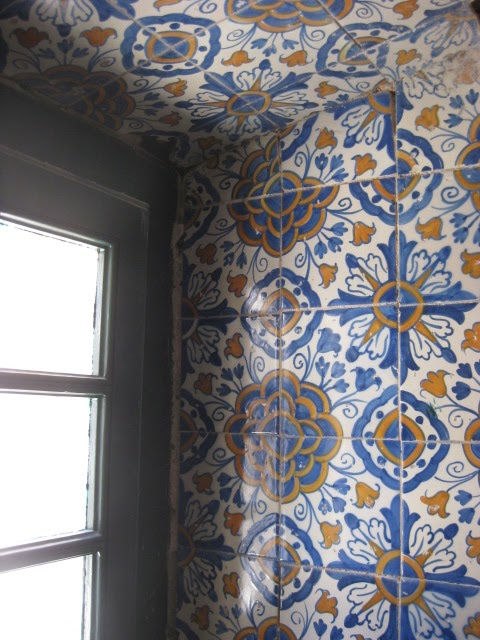
Some nice things: lots of life in the old town in the evenings –  restaurants that spill out onto the streets, music and other performances, night markets, people dressed up just to promenade (stylish shoes are very important here for some reason, though they must be hell to walk in on the cobbles); beautiful terracotta tiles and other ceramics; interesting artworks in the public spaces; storks nesting in chimneys; views of the water from everywhere.


It's getting a bit lonely here now that nearly all the ARC boats and their crews have moved on. We farewelled Linda and Hugh aboard Wild Goose yesterday as they headed for Faro, then on to Spain. We're really missing Paddy, of course. Hopefully the new sails will be here soon, then we'll head for Gibraltar and then probably Morocco. After that, who knows?

Saturday, 23 June 2012

Lagos, Portugal


Any bit of land would have looked good after a month at sea (well, eight days since we last saw land) but we were especially fortunate to end up here on the beautiful Algarve coast. Lovely beaches, spectacular sandstone cliffs and caves, and, considering it's a major tourist destination, very reasonable living costs (by Australian standards. Actually everywhere is pretty reasonable compared to Australia - even Bermuda and the Azores which are miles from anywhere). I hadn't heard much about Portuguese food, but it's great - fresh cheap seafood, beautiful fruit (cherries, figs, apricots and peaches at the moment), the best tomatoes ever, olives, really good cheeses and bread - and the wine is excellent. Even the cheapo stuff (less than 2 euros a bottle!) is quite drinkable. I've just come back from the Saturday market where I spent less than 10 euros and came back with a huge basket of fresh produce.

For our first few days here, we enjoyed the company of Padraig's family - his lovely wife Clare and his parents Bridgeen and Mickey. It's easy to see where Pad's adventurous spirit and positive attitude to life come from. Mickey is a great storyteller and a veteran triathlete, and I'm sure Bridgeen must be one of those Selkies I've read about in Celtic fairytales. Only a seal-person could swim a couple of kilometres in the ocean every day! It was really sad to say goodbye to the Mallon family but I hope we will meet up again soon, when we get to Ireland (or any time before that - wherever Common Sense happens to be).


We also enjoyed the company of Diane from Outer Limits, the ARC yacht that was lost after a collision with a whale just out of Bermuda. It was very sobering to hear her story, but great that the four crew were rescued without injury. The final ARC parties were fun and a good opportunity to share experiences with all the others who had crossed the Atlantic with us - we didn't actually see any of them at sea, but we know they were all out there! We welcomed in Wild Goose and First Edition III, after the festivities were over. First Edition is a similar boat to ours, and it was great to see Dave arrive safely after undergoing some repairs in Horta.

We're going to be here in Marina de Lagos for a month, travelling by bus or train to some of the surrounding areas. Do get in touch if you're going to be anywhere close by - friends are aways welcome aboard!

Wednesday, 20 June 2012

ARC Blogs

Hi all - here are the brief blogs we posted via satelite on the ARC website during the rally, for those who missed them.

The Best Laid Plans …
37° 9.3’N   43° 0’W
Well it doesn’t do to get too complacent, does it? There we were,  finally making some reasonable time and distance, enjoying the good wind conditions and planning to be in Horta not too far behind the rest of the ARC fleet – hopefully still on our target of the 31st. The sea gods thought otherwise. Friday night saw strong squalls from the east, combined with the problem of not being able to furl our headsail (we’d had to replace a frayed furling line with a spare spinnaker halyard that wasn’t really right for the job) and we were forced to run south for the whole night. It’s painful to go backwards, losing those hard-won miles, but it’s even worse under such horrible conditions, with big swells slapping us sideways every few minutes. We couldn’t have been more alone, or further from help, right in mid-Atlantic. Times like this are a test of character – Terry held the fort, I had a meltdown and, unbelievably, Padraig had a good sleep!
After the storm comes the calm – so we’ve just had a full night of motoring in very light winds, but at least we’ve been heading in the right direction. And now, at last, the wind has come up to about 16 knots, we’ve turned off the engine and we’re making about  4.5 knots on a heading a little north of our course line.  We’re probably looking at an arrival on June 2, which means we’ll miss the start of the Azores cruise.  We just want to get there safely, without further drama or damage. Lots of love to any friends and family watching our progress – we’re doing OK and looking forward to catching up with you on-line soon.


‘We joined the Navy to see the world,
And what did we see?
We saw the sea.’     (South Pacific)

That about sums it up: we’ve seen a lot of sea. In all its moods from calm to calamitous, from a dream of surfing dolphins and soaring shearwaters to a nightmare of inky peaks and canyons.
It feels as though we’ve made very slow progress – well behind the ARC fleet, most of which have arrived in the Azores or will do so shortly. This is due, I guess, to a combination of inexperience, minor misfortunes and a boat untested in open ocean conditions. But hey! We’ve sailed over 1400 nautical miles on this passage (plus 900 to Bermuda before that, 400 through the Bahamas & 1200 down the US East Coast) and we’re ‘almost’ there! We’re all reasonably intact, aside from the usual sailor’s array of colourful bruises; Common Sense seems to be holding together (with the help of a lot of ropes and bits of gaffer tape); we’re well fed and still on speaking terms, and as far as I can tell, no-one is barking mad just yet. We’ve managed some very scary episodes with teamwork and good humour. I think we’re doing OK.
Tuesday night: another horrible storm with winds gusting to 50 knots and big following swells. A pin holding the boom in place was shorn away with an awful crash and clatter. Paddy identified and fixed the problem in no time, despite the driving rain and screaming wind. What a legend!
380 miles to go. Beam me up Scotty.
PS Padraig says the rum is running out and he requests an urgent airdrop.


Azores High
Well we finally tootled into Horta Marina after seventeen and a half days at sea, well behind the rest of the ARC fleet but relatively intact – just a slight rip in the mainsail and a shattered windscreen in the dodger to show for our battle with the elements.  We really appreciated the warm reception – cheers and greetings all the way in from the breakwater, and a lovely cold beer from the guys on Miss Carol. We missed all the Rally festivities on Horta, but made up for it with a few days of sightseeing, eating and drinking on this lovely island. We took the ferry over to Pico, and of course Padraig is now determined to return to climb the volcano. Actually we’re all keen to come back to Azores  – there is obviously a lot more to see and do than we had time for this time around.  Not to mention the great bread, cheese, wine, olives and fish, and the friendly local people.
The Azores Rally left the day after we came in – we needed a rest and Common Sense needed a bit of attention, AND we had to paint our bit of the seawall - so we didn’t go. We thought of joining up again in Sao Miguel, but in the end decided on a cunning plan to sail straight from Horta to Lagos in Portugal. We slipped away on the afternoon of Wednesday 6th. After the high winds off Pico, there was very little wind at all for a day or so, so we motor-sailed. Today  (8th) has been a lovely day, fine with 18 knot winds from the south west allowing us to make over 6 knots all day. Let’s hope for more of the same, so we can be in Lagos AHEAD of the fleet. With a bit of luck this time we’ll be the ones cheering from the breakwater and supporting the bar at all the parties.
Ate logo!
Carol, Terry and Padraig aboard Common Sense


Horta to Lagos


After several sacrifices to the sea gods (mostly in the form of fishing tackle), a Mass in Portuguese, the required wall painting to summon up fair winds and a string of unprintable imprecations from Terry, AT LAST we had a run of fine sailing weather. The only exception was a brief, wild ride on a forty knot gust sweeping down from the volcano on Pico. Overall we managed 5 – 6 knots for most of the 900 nautical mile passage, scooting along on the front of the fronts, rather than wallowing in their wakes.  Much better. 

Time did start to hang heavily in the uneventful middle days of the voyage. As our spot crept at a glacial pace across the chart (with the catamarans Scolamanzi  and Purrr-fect rapidly gaining on it) we found ourselves engaged in unaccustomed pastimes – Padraig writing letters and playing chess against the computer; myself doing girly things like cooking and embroidery;  and I’m sure I saw Terry with at least one novel. The fish started biting again - unfortunately we lost a big tuna (and the tip of the fishing rod, lures etc) but compensated with a nice one the next day, followed by another.

Then, finally, it was countdown time – 100 nautical miles to go.  80. 50. Suddenly we were into the Traffic Separation Zone and life became exciting and eventful. We heard Johannes and Henriette of Scolamanzi on the VHF, negotiating their way through a line of south-bound freighters behind us. Ahead, ships appeared very quickly in the northbound lane; a couple of them we needed to watch carefully. Without AIS we could not identify them, but Henriette kindly called the nearest one on VHF, providing us with their name. It was a little disconcerting to hear that we did not appear on their radar, but the watchman assured us that they had us ‘visual’ and we could pass in front. We did pass just metres in front of the huge cargo vessel, then had the pleasure of seeing a bunch of sailors peering out the rear windows at us. That’s how close we were. Another reminder of just how small a speck on the ocean our 42 foot boat really is. During the night, we saw Scolamanzi’s  lights as she flew past us. Not even four days’ head start could get us across the line first!

The light from Cape St Vincente guided us to the mouth of the Med, and as dawn broke Padraig and I had the wonderful sight of the cape, with its light and white chapel, that has greeted mariners for hundreds of years. We dipped our ensign respectfully to the saint, and tried to wake Terry who staggered to the deck but was just too exhausted to stay up. Sailing east along the majestic Algarve coast, we had our best conditions of the whole trip. With seven knots and beautiful smooth seas, we enjoyed the sight of the little white villages, rugged sandstone cliffs and all the various craft on the water. For Terry and me, it was Europe at last, a dream come true after about 40 years! For Padraig, it was a goal achieved and another great adventure amongst the challenges he sets himself – and of course he was just about bursting to see Claire, his beautiful wife who would be in Lagos that day.
I took us in through the channel and it was a thrill to steer Common Sense up the canal that runs right into Lagos. Up to the customs dock, then a comfortable entry into our slip in the gorgeous Marina de Lagos, where the friendly and efficient staff welcomed us and secured the boat.  
Stepping ashore after a journey of over 4000 nautical miles and 34 days at sea was quite overwhelming. Thanks to the ARC, congratulations to all our companions on the crossing and kudos to Terry for shouldering the skipper's responsibilities and getting us there safely through every trial. Especially thanks to Padraig - we were blessed to find a crewman who was so willing, capable and positive through every situation. And good craic as well.